
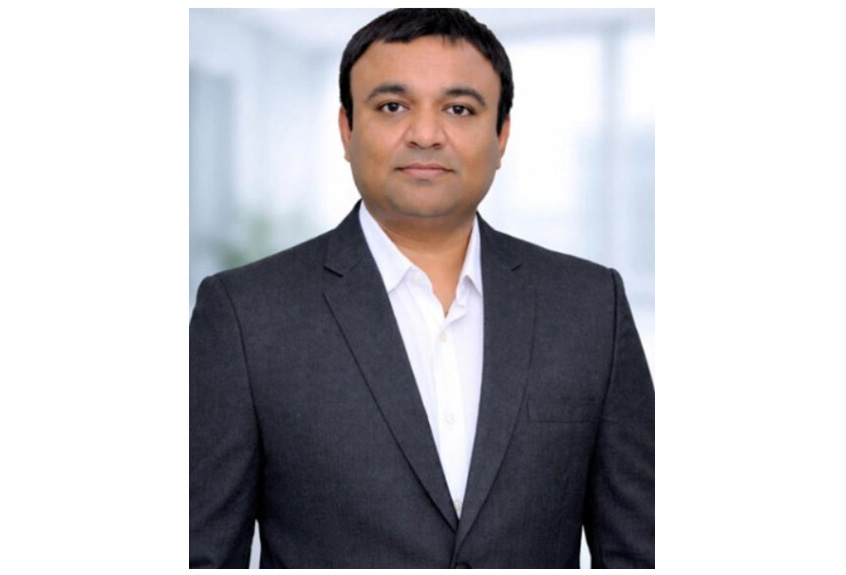
In an exclusive conversation with Sandip Patel, Managing Director, FarmPeace, he discusses the changing landscape of Indian agriculture and why farmers must increasingly be viewed as entrepreneurs rather than merely producers. He shares how FarmPeace is helping farmers make more informed, data-led decisions around crops, inputs, resources, markets and profitability, while encouraging a stronger focus on planning and long-term value creation.
Patel also reflects on the behavioural shifts he has witnessed among farmers, the importance of balancing farmer welfare with commercial sustainability, and how ground-level feedback continues to shape FarmPeace’s product strategy. Looking beyond conventional measures such as revenue and user acquisition, he explains why farmer trust, better decision-making, improved productivity and greater resilience are the real markers of success for the organisation.



The conversation offers insights into how technology can complement farmers’ experience and contribute to a more efficient, informed and commercially resilient agricultural ecosystem.
1. Every startup faces defining moments. What has been FarmPeace’s biggest turning point so far, and what did it teach you?
One of FarmPeace’s biggest turning points was realising that building for agriculture requires us to first understand the farmer, rather than simply build technology for the sector. Every farmer operates within a very different combination of geography, crops, market conditions, resources and risks. A solution that looks effective on paper may not necessarily fit into that reality.
This changed the way we approached product development. We started viewing technology as an enabler rather than the solution itself. The real objective is to help farmers make better decisions and create measurable value for them.
The biggest lesson has been that adoption in agriculture is fundamentally built on trust. Farmers will adopt a solution when they can see its relevance, understand its value and experience a tangible improvement in their day-to-day lives. That principle continues to shape how we build FarmPeace.
2. Which outdated assumptions about Indian agriculture do you believe are holding the industry back?
One of the biggest misconceptions is that farmers are primarily producers and that increasing production is the primary measure of agricultural progress. Farmers are, in reality, entrepreneurs managing businesses in an environment where weather, prices, demand, input costs and market access can change significantly.
Another assumption is that rural India is reluctant to adopt technology. Our experience suggests otherwise. Farmers are open to technology when it solves a genuine problem, is simple to use and provides clear value. The issue is often not technology adoption, but whether the technology has been designed around the farmer’s reality.
We also need to stop viewing agriculture as an isolated sector. It is closely connected to finance, insurance, logistics, food processing, retail, climate and consumer behaviour. The future of agriculture will depend on how effectively these parts of the ecosystem work together.
3. How important is collaboration between agritech startups, financial institutions, insurers, and policymakers in building a resilient agricultural ecosystem?
Collaboration is essential because the challenges facing agriculture are too interconnected for any one organisation to solve independently. A farmer may need access to credit, insurance, quality inputs, market information and buyers at different stages of the same agricultural cycle.
Agritech companies can bring technology and new models, financial institutions can enable access to capital, insurers can help manage risk, and policymakers can create the infrastructure and enabling environment required for scale.
The opportunity now is to move from fragmented solutions towards a more connected ecosystem. When these stakeholders can work together and share relevant data, services and insights responsibly, farmers can access solutions that are more seamless and better suited to their needs.
4. If FarmPeace could solve only one challenge for Indian farmers over the next five years, which problem would you prioritise and why?
I would prioritise helping farmers make better decisions through timely, reliable and actionable information.
A farmer makes dozens of important decisions during every crop cycle—what to grow, when to sow, which inputs to use, how much to invest, when to harvest and when and where to sell. These decisions are influenced by factors such as weather, prices, demand, input costs and local conditions, which can change quickly.
Technology cannot eliminate agricultural risk, but it can reduce the uncertainty around many of these decisions. Giving farmers better information at the right time can improve productivity, profitability and resource utilisation while helping them respond more effectively to changing conditions.
For FarmPeace, empowering farmers to make informed decisions is therefore not just one product objective; it is central to the larger vision of making agriculture more resilient and economically sustainable.
5. Looking ahead, what emerging trends do you believe will reshape Indian agriculture faster than most people expect, and how is FarmPeace preparing for them?
I believe three developments will reshape Indian agriculture significantly: AI-driven decision-making, climate-resilient agriculture and the increasing digitisation of agricultural markets.
AI will increasingly move beyond being a predictive technology and become a practical decision-support layer for farmers. It can help bring together information on weather, crops, markets and farm conditions to make complex decisions more accessible.
At the same time, climate variability will make efficient use of water, soil and other resources increasingly important. Farmers and agribusinesses will need to build resilience into their operations rather than treating climate-related risks as occasional disruptions.
We are also likely to see stronger digital connections between farmers, businesses and consumers, creating greater transparency and improving access to markets.
At FarmPeace, we are preparing for this shift by focusing on technology that is practical, accessible and grounded in real agricultural needs. The farmer of the future will not simply be a technology user; they will increasingly be an informed decision-maker and entrepreneur, using technology to run their farm more efficiently and respond to a rapidly changing market.