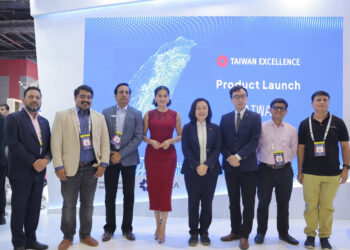

Hyderabad, (Telangana) [India], December 15, 2025: For many years, Indian aquaculture has depended on imported oxygenation and water-treatment systems. These technologies brought sophistication, but they also introduced challenges: high purchase costs, long waiting periods for spares, and designs that were not always suited to Indian pond conditions. As a result, genuinely advanced tools remained out of reach for a large section of farmers who needed them the most.
The arrival of Prasinos’ indigenous nanobubble technology signals a turning point. It offers the performance farmers expect from global systems, but with the practicality, reliability, and affordability that only a locally engineered solution can provide.



Delivering Global Standards Without the Global Price Tag
One of the biggest barriers to adopting high-end technology has always been cost. Imported nanobubble systems perform well, but their overall expense, from import duties to servicing, makes them difficult to justify for many operations. Prasinos offers a different approach. Designed and built in India, the technology brings the same high oxygen-transfer efficiency and water-quality improvement, but without the heavy financial load.
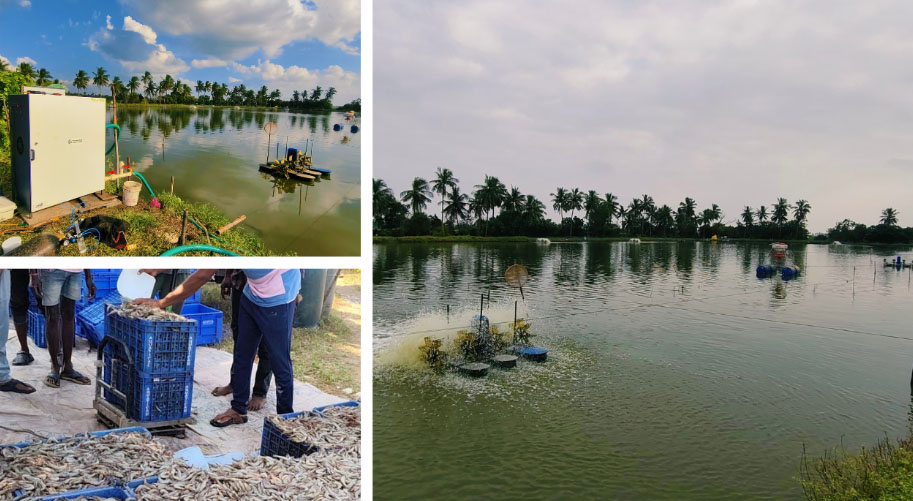
Just as important is adaptability. Prasinos systems are built to handle the realities of Indian aquaculture: warm climates, variable salinity, silt-heavy ponds, and fluctuating power conditions. Farmers get dependable performance throughout the production cycle, and when service is required, it happens quickly and locally. This combination of capability and practicality makes the technology not only advanced but truly usable.
Supporting India’s Transition to Modern Aquaculture Practices
India’s aquaculture sector is steadily moving toward systems such as RAS, high-density stocking, intensive nurseries, and deep-water ponds, all of which depend on stable oxygenation. However, the cost of imported equipment has slowed wider adoption of these models.
Prasinos helps bridge that gap. Its nanobubble technology provides deeper oxygen penetration, steadier dissolved oxygen profiles, and cleaner water conditions, all critical factors for consistent growth and survivability. Farmers who adopt the technology often see more predictable feeding behaviour, improved growth performance, and reduced stress during vulnerable periods such as weather changes or pond transitions.
These gains contribute to stronger harvests and more stable operations. For many farms, this marks the first time that advanced aquaculture feels accessible rather than aspirational.
A Technology Designed for India, And Supported in India
Beyond technical performance, dependable support is a major advantage of locally manufactured equipment. With imported systems, even minor issues can lead to extended downtime. Prasinos removes that uncertainty. Service teams are based within the country, spare parts are readily available, and the systems themselves are engineered with maintenance simplicity in mind.
This level of responsiveness builds confidence among farmers and allows operations to run smoothly throughout the culture cycle.
A More Self-Reliant Future for Indian Aquaculture
Prasinos represents more than an individual innovation. It reflects a broader shift toward self-reliance in a sector that plays a vital role in India’s food security and rural economy. By offering a high-performance, locally engineered alternative to imported systems, Prasinos is helping the industry reduce external dependence and move toward a more sustainable, scalable, and cost-effective future.
India’s next phase of aquaculture advancement is no longer reliant on international equipment. It is being developed and refined here at home, and Prasinos is helping lead that progress.